The Alzheimer’s Association identifies these 10 warning signs of Alzheimer’s disease:
- Memory loss that disrupts daily life
Forgetting recently learned information, important dates or events, repeatedly asking the same questions, or relying more on memory aids or family members. - Challenges in planning or solving problems
Difficulty following a familiar recipe, keeping track of monthly bills, or concentrating on tasks that were once routine. - Difficulty completing familiar tasks
Trouble driving to a familiar location, managing a budget, or remembering the rules of a favorite game. - Confusion with time or place
Losing track of dates, seasons, or the passage of time, or forgetting where they are or how they got there. - Trouble understanding visual images and spatial relationships
Difficulty reading, judging distances, recognizing colors or contrast, or navigating while driving. - New problems with words in speaking or writing
Trouble following or joining conversations, stopping in the middle of a sentence, repeating themselves, or calling things by the wrong name. - Misplacing things and losing the ability to retrace steps
Putting items in unusual places (such as keys in the refrigerator) and being unable to find them, sometimes accusing others of stealing. - Decreased or poor judgment
Making poor financial decisions, falling for scams, giving away large sums of money, or paying less attention to personal hygiene. - Withdrawal from work or social activities
Avoiding hobbies, social events, work projects, or sports because they have trouble keeping up or following conversations. - Changes in mood and personality
Becoming confused, suspicious, fearful, anxious, depressed, or easily upset, especially in unfamiliar situations.
What’s considered normal aging?
Some memory changes are a normal part of aging. For example:
- Occasionally forgetting a name but remembering it later.
- Missing a payment once in a while.
- Making an occasional error when balancing a checkbook.
- Needing help with technology.
- Sometimes forgetting what day it is but figuring it out later.
When should someone seek an evaluation?
If someone is experiencing one or more of these warning signs, especially if the symptoms are getting worse or affecting daily life, it’s a good idea to schedule an evaluation with their primary care provider or a memory specialist. Early diagnosis can help identify treatable causes of memory problems, provide access to treatments that may slow progression for some people, and allow individuals and families to plan for the future.
Join Us for Our Smart Senior Living Seminar
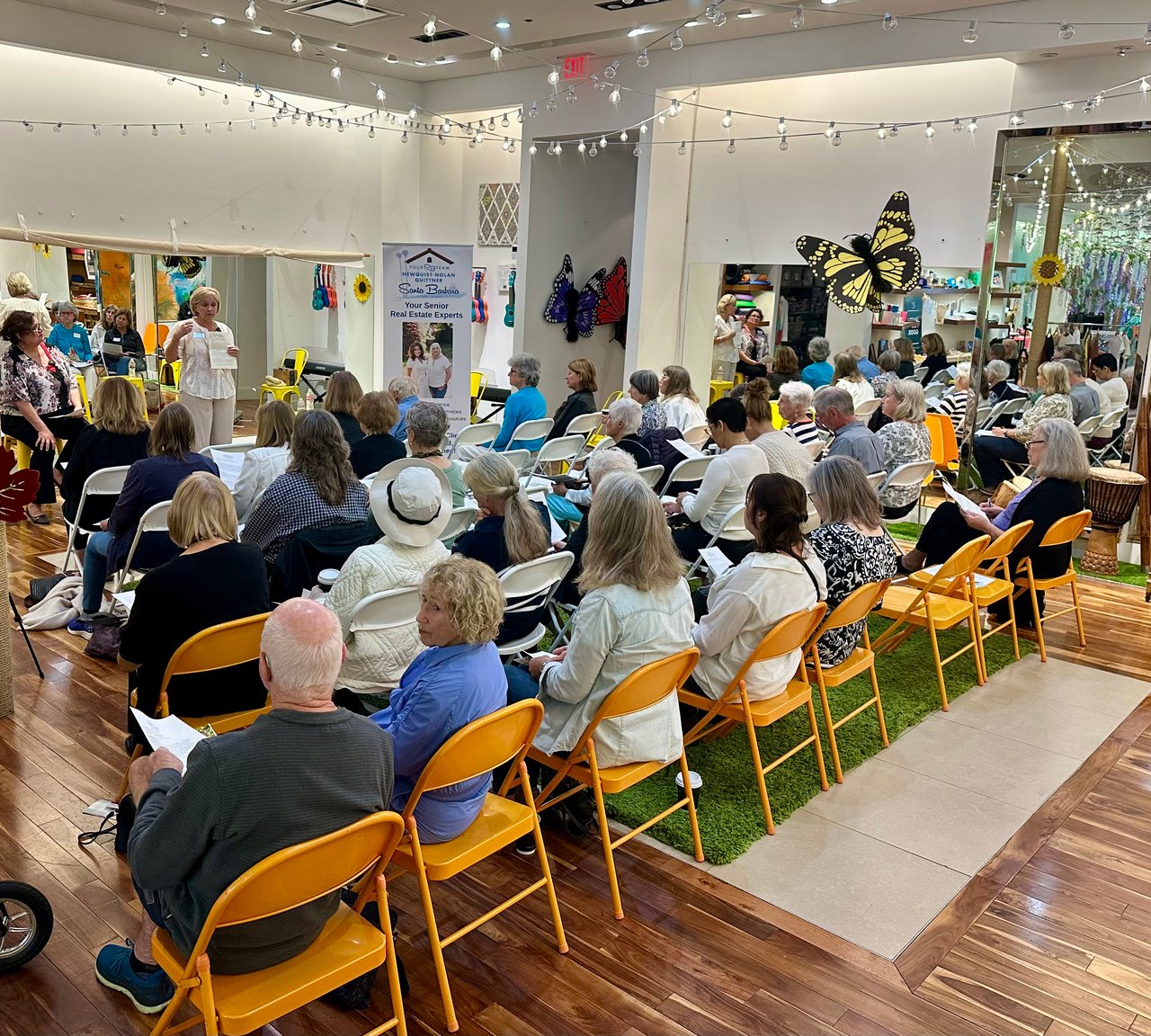
If you or someone you love has concerns about memory changes, we invite you to join us for our Smart Senior Living Seminar on Tuesday, August 4th.
10 a.m. Grace Fisher Foundation’s Inclusive Arts Clubhouse in La Cumbre Plaza
1:30 p.m. Cody’s Café 4898 Hollister Ave in their Event Room
We’ll explore the 10 Warning Signs of Alzheimer’s, learning how to recognize the difference between normal aging and memory loss, and to discuss the importance of early detection and available resources.
Hosted by Rachel Quittner and Nancy Newquist Nolan of Your SB Team. We hope you’ll join us for this informative and supportive community event.
*If you are reading this after August 4th or cannot attend the event. All of our Seminars are on video and posted on our YouTube page: https://www.youtube.com/@YourSBTeam